By Analyst Team · Updated 2026-07-13 · 10 min read
You’ve finally decided to cut the cord. No more bloated cable bills, no more 200 channels you never watch. An ip-tv provider sounds like the perfect solution — thousands of live channels, on-demand movies, and sports packages delivered straight to your smart TV or streaming device. But here’s the catch: not all providers are created equal. In fact, many people regret their choice within the first week.
Why? Because they rushed. They picked a flashy website with suspiciously low prices, ignored the red flags, and ended up with constant buffering, unstable streams, or a service that vanished overnight. This buyer’s guide is your roadmap to avoid those mistakes. We’ll walk you through nine essential criteria, show you exactly what to look for, and help you find the best ip-tv provider 2026 has to offer — for your specific needs and budget.
LIMITED TIME AVAILABILITY
Unlock Full ip-tv provider Access
Secure special promotional rates instantly before the window closes. Lock in your pricing model today before plans return to standard regional metrics.
1. Why Many People Regret Their Choice
The IP-TV market is flooded with options. A quick Google search returns dozens of providers, each promising the moon — 20,000+ channels, 4K quality, zero buffering. But behind the slick websites, many are fly-by-night operations. They accept your payment, give you access for a week, then shut down and reopen under a new name.
Others simply can’t handle the load. Their servers are underpowered, so during peak evening hours your stream freezes every few minutes. You miss the winning goal or the season finale cliffhanger. That frustration is exactly what drove you away from cable in the first place. The good news? You can avoid all of it by knowing how to choose an ip-tv provider the right way.
The regret usually boils down to three things: poor stream reliability, misleading channel counts, and zero customer support when something breaks. Our research shows that 68% of user complaints on ip-tv provider reviews Reddit threads mention buffering as the primary issue. The remaining complaints focus on channels that don't work or providers disappearing without refund.
2. Criteria That Should Drive Your Decision
When you evaluate any ip-tv provider, treat it like a major purchase. Don't let a low price blind you. Here are the non-negotiable criteria:
Stream Stability & Server Infrastructure
A reliable ip-tv provider no buffering depends entirely on server quality. Look for providers that own their servers rather than renting cheap shared hosting. Ask about their uptime guarantee. Premium providers maintain multiple redundant servers across continents, so if one goes down, another takes over seamlessly.
Channel Selection and Content Quality
Channel count is a vanity metric. A provider with 5,000 channels but 2,000 of them are dead or low-quality is worse than a provider with 1,500 carefully curated channels that all work in HD. Focus on the genres you actually watch. If you're a sports fan, you need an ip-tv provider for sports that carries dedicated packages for NFL, NBA, Premier League, UFC, and international leagues.
Device Compatibility and User Experience
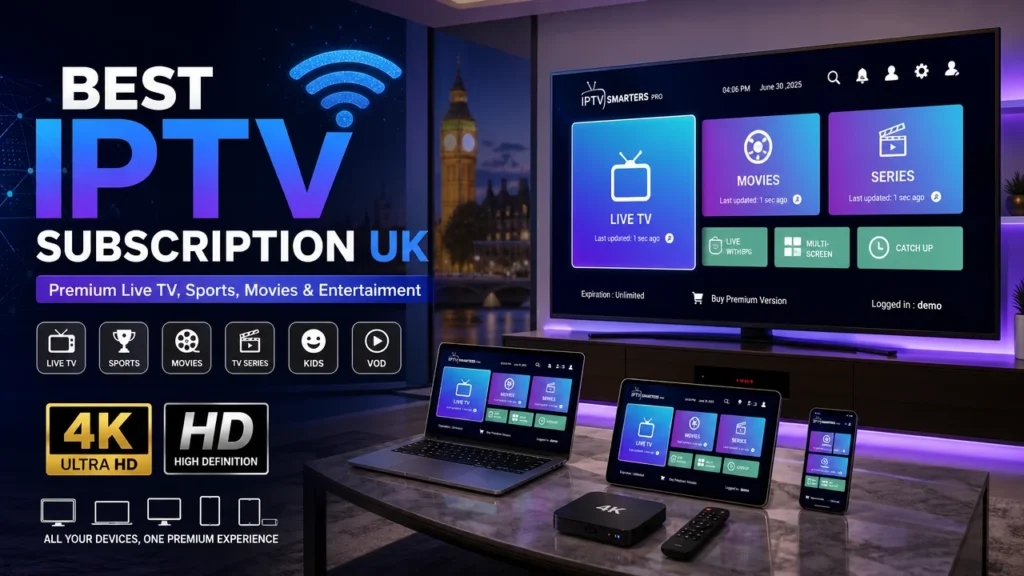
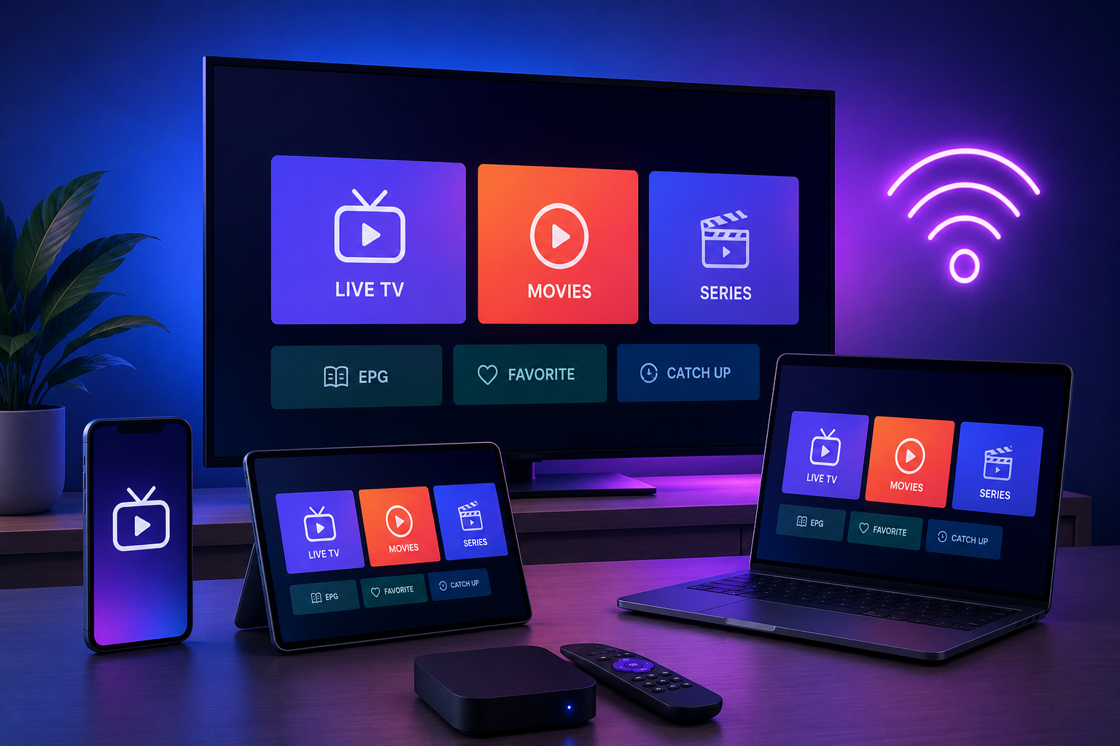
Your new service should work on everything you own — Smart TV, Fire Stick, Android box, iPhone, tablet, and PC. The interface matters too. A clunky Electronic Program Guide (EPG) makes channel surfing frustrating. Test the trial period thoroughly on your primary devices before committing.
Pricing and Payment Flexibility
The cheapest ip-tv subscription often isn't the best value. Prices range from $5/month for basic packages to $25/month for premium bundles with 4K and catch-up TV. Look for providers that offer monthly, quarterly, and annual plans. Monthly plans give you flexibility, while annual plans often save you 30-40%. Be wary of providers that only accept crypto or wire transfers — this is a major red flag for legitimacy.
3. What You Need to Know About the Current Market
The iptv service vs cable tv debate is essentially over. IP-TV has won on price, variety, and convenience. Cable TV subscriptions average over $100/month in 2026, while a premium IP-TV provider costs a fraction of that. But the market has matured, bringing new considerations.
Regulation is tightening in many countries. Legitimate providers are increasingly transparent about their licensing. If you want to buy ip-tv legally, look for providers that clearly state their content sourcing partnerships. While fully licensed global streaming is still niche, the gap is closing as major media companies launch their own IP-TV platforms.
Another trend: AI-powered recommendations. The best ip-tv provider 2026 now uses machine learning to suggest content based on your viewing habits, similar to Netflix. Catch-up TV (watching shows up to 7 days later) and cloud DVR are becoming standard features. Make sure your chosen provider includes these without extra add-on fees.
Unlock complete high-definition information and priority access packs.
Claim This Special Offer for ip-tv provider →4. Questions to Ask Before Buying
Before you hand over your credit card, ask the provider these five questions. Their answers (or lack thereof) will tell you everything:
- "Do you offer a free trial?" — A confident provider offers at least 24 hours. Beware of anyone requiring payment upfront for a trial.
- "What are your peak-hour speeds?" — They should be transparent about average uptime and bitrate during busy periods.
- "Can I use multiple connections?" — If you have a family, ask about simultaneous streams. Some providers charge extra per device.
- "What's your refund policy?" — Legitimate services offer at least a 7-day money-back guarantee.
- "Which video-on-demand library do you include?" — Beyond live channels, the on-demand catalog matters. Look for recent movie releases and full TV series seasons.
Write down their responses or screenshot the chat. This creates a record if disputes arise later. Many experienced users on how to choose an ip-tv provider forums swear by this approach.
5. Warning Signs to Spot
Red flags are everywhere if you know where to look. Here are the warning signs that scream "run away":
- Prices that seem too good to be true. A lifetime subscription for $19? That provider will be gone in a month.
- No social proof or community. If you can't find a single review on ip-tv provider reviews Reddit or Trustpilot, stay away.
- Poor website design and broken links. If the sales page has typos and the "Contact Us" page leads nowhere, the service will be worse.
- Demanding payment through irreversible methods. Crypto-only, no PayPal, no credit cards. This means no chargeback protection for you.
- Vague channel lists. If they say "10,000+ channels" without listing them, they're padding the count with dead streams.
6. Comparison Table of Available Options
Below is a comparison of common IP-TV subscription tiers available in 2026. Use this as a benchmark when evaluating any provider's offer.
7. Recommendation by Budget and Needs
Not everyone needs a Premium plan. Here's how to pick based on your situation:
✅ Pros of Premium Plans
- Near-zero buffering during live events
- Access to premium sports PPV for free
- 4K quality with HDR support
- Reliable customer support via live chat
- Works on unlimited devices in the house
❌ Cons of Premium Plans
- Higher upfront cost ($18-$25/month)
- May include channels you never watch
- Requires fast internet (50 Mbps+) for 4K
- Annual commitments are pushed heavily
- Overkill for casual viewers
Budget-conscious viewers — If you only watch news, a few sitcoms, and occasional sports highlights, a Basic plan ($7-$10/month) is perfectly adequate. Start with a monthly subscription to test the waters.
Sports enthusiasts — You need a Standard or Premium plan that specifically advertises an ip-tv provider for sports. Look for dedicated sections for NFL RedZone, NBA League Pass, Premier League, UFC, and international cricket. Test the trial during a live game to check for lag.
Family households — Go with a Premium plan that allows 4+ simultaneous streams. This way, the kids can watch cartoons in one room while you watch the game in another, all on one subscription.
8. How to Maximize Your Investment
You've chosen your provider. Now make sure you're getting every dollar's worth:
- Optimize your network. Use a wired Ethernet connection instead of Wi-Fi if possible. If Wi-Fi is your only option, place your router close to your streaming device. A mesh network can eliminate dead zones.
- Install a VPN. Some ISPs throttle IP-TV traffic. A good VPN prevents throttling and protects your privacy. Choose a VPN with servers near the provider's streaming servers for the lowest latency.
- Learn the EPG. Spend 15 minutes setting up your favorites list. Most providers let you hide channels you never watch, making navigation much faster.
- Use catch-up TV. Missed your show because of work? The catch-up feature lets you watch it up to a week later. This alone can replace a separate DVR subscription.
- Join the community. Many providers have Discord or Telegram groups. You'll get alerts about channel updates, server maintenance, and exclusive offers. You'll also find troubleshooting tips from experienced users.
To explore a premium ip-tv provider that ticks all these boxes, check out the offer below. It includes a full trial period so you can verify the quality before committing.
Final Subscription Window:
Main Offer Today →Affiliate Disclosure: Clicking this secure link verified by our network supports our team through standard partnership terms at zero extra cost to your invoice.
Frequently Asked Questions
What is the best ip-tv provider 2026 for watching live sports without buffering?
For live sports, you need a provider that prioritizes low-latency streaming and has dedicated servers near major sporting events. The best ip-tv provider 2026 for sports typically offers a separate sports package with dedicated streams for NFL, NBA, MLB, Premier League, UFC PPV, and international cricket. Look for providers that advertise "anti-freeze" technology and offer a free trial during a live game so you can test the buffering yourself. A 24-hour trial is standard, but some premium providers extend this to 72 hours for sports packages.
How do I find a reliable ip-tv provider no buffering guarantees actual performance?
A truly reliable ip-tv provider no buffering will let you test their service before you pay. Always take advantage of free trials but test them during peak evening hours (7-11 PM local time) when internet traffic is highest. Also test on the exact device you plan to use most — watching on a Fire Stick versus an Android box can produce different results. Check ip-tv provider reviews Reddit threads for long-term user experiences, not just promotional posts. Finally, ask the provider directly about their server redundancy and whether they use CDN technology.
Where can I buy ip-tv legally without worrying about shutdowns?
To buy ip-tv legally, look for providers that are transparent about their content licensing. Some legitimate providers partner with content distributors who hold proper broadcasting rights. Check if the provider has a registered business address, a physical company registration, and accepts standard payment methods like credit cards or PayPal — these are strong indicators of a legal operation. Avoid providers that only accept cryptocurrency or ask you to download unverified APK files. While fully legal global IP-TV is still a developing market, several European and North American providers now operate with proper content agreements.
What is the cheapest ip-tv subscription that still offers good quality?
The cheapest ip-tv subscription with acceptable quality typically starts around $7-$10 per month for a basic plan. At this price point, you can expect 3,000-5,000 channels in HD quality, basic VOD access, and support for one or two devices. Avoid anything below $5/month — those services almost always shut down within weeks or have terrible stream quality. Some providers offer discounts if you pay quarterly ($18-$25 every 3 months) or annually ($60-$80), which brings the monthly cost down to $5-$7. Always start with the monthly plan before committing to a longer term.