By Michael T. · Updated 2026-07-07 · 9 min read

If you've been researching how to start a self sufficient backyard, you've likely run into conflicting advice. One source says you need two acres and a tractor. Another insists you can feed a family of four from a single raised bed. Both claims sound plausible—and both can wreck your progress if you follow them blindly.
The reality is that self-sufficiency exists on a spectrum. The best self sufficient backyard guide won't promise instant independence or overnight food security. Instead, it acknowledges the trade-offs, the learning curve, and the genuine strategies that move the needle. Below, we unpack five persistent myths that sabotage good-faith efforts and replace them with what the evidence actually shows.
Why Misconceptions Damage Your Results
Misunderstandings about self-sufficiency don't just waste time—they create discouragement. When you believe a myth and it fails, you tend to blame yourself rather than the bad advice. This pattern keeps people from reaching even modest goals like growing 20% of their own vegetables or reducing grocery bills by a third.
A self sufficient backyard book review that honestly addresses limitations is far more useful than one that sells fantasy. The difference between a productive homestead and a failed experiment often comes down to this: accurate expectations matched with practical techniques. Let's clear the fog.
Myth 1 vs. Reality: You Need a Huge Property
Related Reading: Tvpass in Practice: Real Experience After Extended Use
Popular belief: Unless you own several acres in the countryside, there's no point in pursuing backyard self-sufficiency.
The documented reality: Intensive growing methods—square-foot gardening, vertical trellising, and container systems—can produce surprising yields in small spaces. The key isn't land size but usable growing area and management intensity.
Consider a 20-by-30-foot suburban lot with six raised beds (each 4x8 feet). Properly planted and succession-sown, that space can produce 300-400 pounds of vegetables in a season. That's roughly half of what an average US household consumes annually in fresh produce. The self sufficient backyard plans that work best on small properties emphasize stacking functions: grow upwards, use trellised crops underneath, and interplant fast-growing greens between slower vegetables.
This doesn't mean land is irrelevant—it does limit calories from staple crops like potatoes or grains. But the myth conflates "total food independence" with "meaningful food production." Most people aiming for a self sufficient backyard aren't trying to replace the supermarket entirely; they want substantial fresh food, reduced costs, and the satisfaction of growing their own. That's achievable on a quarter-acre or less.
Myth 2 vs. Reality: It's Cheaper Than Buying Groceries
Popular belief: Growing your own food automatically saves money compared to store-bought produce.
The documented reality: Start-up costs can be substantial. Soil amendments, raised bed materials, quality seeds, tools, irrigation supplies, and fencing against pests add up quickly. A 2023 study from the University of Vermont found that first-year gardeners spent an average of $238 on supplies and harvested roughly $295 worth of produce—a net savings of only $57, and that's assuming zero crop failures or pest losses.
Where the economics shift in your favor is year two onward. Perennial crops like asparagus, rhubarb, and fruit trees have high upfront costs but pay back over five to ten years. Seeds cost pennies per plant if you save them. Composting eliminates fertilizer purchases. The self sufficient backyard for beginners should emphasize starting small: three raised beds, five perennial plants, and a commitment to building soil fertility naturally. That approach minimizes financial risk while you learn.
The real financial win isn't grocery bill elimination—it's resilience. When fresh herbs cost $3 per bunch at the store or you'd need to drive 20 minutes for a specific vegetable, having it steps from your kitchen changes both your budget and your diet quality.
Myth 3 vs. Reality: You Can Learn Everything from YouTube
Related Reading: Comparing Dice Dreams Free Rolls: Which Option Suits You?
Popular belief: Free online videos and blogs contain all the knowledge you need to become self-sufficient.
The documented reality: While online resources are valuable, they suffer from three structural problems: inconsistency in advice, lack of regional specificity, and absence of a coherent system. A gardener in the Pacific Northwest watching a drought-tolerant Arizona channel will get poor results. A video on "easy composting" might skip the critical carbon-to-nitrogen ratio that prevents odor and attracts pests.
The most effective self sufficient backyard guides present an integrated system—soil management, plant selection, pest control, water conservation, and season extension as interconnected parts, not isolated tips. This is where structured programs outperform piecemeal learning. The self sufficient backyard pdf resources that include planting calendars by USDA zone, pest identification charts, and troubleshooting flowcharts give you a framework rather than random advice.
That said, supplementing a solid foundation with YouTube troubleshooting is smart. Use free content for specific problems (aphid outbreak, blossom end rot) but use a unified guide for your overall system design. The myth that "the internet has everything you need" ignores the cognitive load of patching together contradictory advice from hundreds of sources.
Myth 4 vs. Reality: Self-Sufficiency Means Doing Everything Yourself
Popular belief: True self-sufficiency requires growing all your own food, raising animals for meat and eggs, generating your own power, and never relying on external inputs.
The documented reality: This myth creates an impossible standard and leads to burnout. Even experienced homesteaders trade, buy, and barter. They buy chicken feed because growing enough grain on a residential lot is impractical. They purchase soil amendments because their compost alone doesn't supply sufficient nutrients.
The more useful concept is resilience through diversity, not total independence. A self sufficient backyard worth it assessment should measure: what percentage of your vegetables come from the garden, how many months you eat from the garden, and how much you save on specific items. If you grow all your salad greens from April through October—that's success. If you produce half your eggs—that's genuine progress.
Community-scale resilience matters too. Trading excess zucchini for a neighbor's extra tomatoes or buying honey from a local beekeeper creates a web of interdependence that's far more robust than trying to be an isolated island. The myth of total independence actually makes you less resilient because any single failure—a pest outbreak, a broken tool, a bad season—cascades into total collapse.
Myth 5 vs. Reality: It's Too Time-Consuming for Busy People
Related Reading: Free PUBG UC: A Complete Guide to Getting In-Game Currency Safely
Popular belief: A productive backyard requires hours of daily labor, making it impossible for anyone working a full-time job.
The documented reality: Efficient systems dramatically reduce labor. Drip irrigation on a timer eliminates daily watering. Thick organic mulch suppresses weeds for weeks. Self-pollinating crop varieties need no hand pollination. The difference between a time-sink garden and a manageable one is almost entirely a matter of design decisions made before planting.
Research from Iowa State University shows that a well-designed 200-square-foot vegetable garden requires about 25-30 minutes of routine maintenance per day during peak season (June-August), and less than 10 minutes per day in spring and fall. That's two to three hours per week—comparable to what many people spend scrolling social media each evening.
The key is matching your ambitions to your available time. If you have 30 minutes per day, that supports about 300 square feet of garden. Don't plant 1,000 square feet and then wonder why you're overwhelmed. The self sufficient backyard plans that respect time constraints incorporate low-maintenance staples: perennial onions, tree fruits, self-seeding greens like arugula, and no-till beds that build soil structure without annual tilling.
What Actually Works Based on Evidence
After reviewing extensive research from university extension services, successful homesteaders, and published agricultural data, five evidence-backed strategies consistently produce the best results:
- Start with soil testing — Spend $15 on a lab test before planting. You can't improve what you don't measure, and guessing leads to over-fertilizing or missing deficiencies.
- Prioritize perennials — Fruit trees, berry bushes, asparagus, rhubarb, and hardy herbs produce for years with declining maintenance. A mature apple tree costs less than $10 per year to maintain but yields 150-300 pounds of fruit.
- Use season extension — Cold frames, row covers, and mini hoop tunnels add 6-8 weeks of growing on each end of the season. That's a 40% increase in total production with minimal cost.
- Install rainwater catchment — A 55-gallon barrel per downspout catches 300+ gallons per inch of rain on a 1,000-square-foot roof section. This drastically reduces water bills and provides chlorine-free water plants prefer.
- Plant in succession — As soon as spring peas finish, replace them with bush beans. Follow radishes with fall spinach. Continuous harvest from the same bed quadruples seasonal yield.
Popular Belief vs. Reality: Quick Reference
| Myth | Popular Belief | Reality |
|---|---|---|
| Land requirement | Need multiple acres | ✓ 200 sq ft produces meaningful harvest |
| Cost savings | Immediately cheaper | ✓ Breakeven in year 2-3; long-term savings |
| Learning resources | Free online is enough | ✓ Structured guides outperform random tips |
| Self-reliance model | Do everything alone | ✓ Community resilience beats isolation |
| Time required | Hours per day needed | ✓ 25 min/day peak season with good design |
✓ Pros of a Structured Guide
Unified system instead of scattered advice
Planting schedules matched to your climate
Troubleshooting charts for common failures
Year-round planning, not just spring planting
✗ Cons of Piecemeal Learning
Contradictory advice from different sources
No accountability or progress tracking
Missed seasonal windows due to late advice
Higher trial-and-error costs in time and money
Resource mentioned in this article
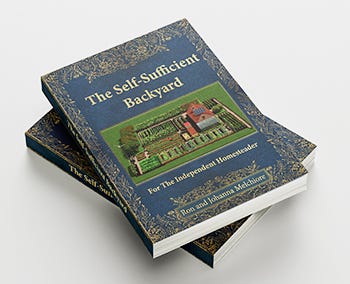
The Self Sufficient Backyard
A comprehensive guide covering soil preparation, planting calendars, pest control, and season extension for all USDA zones.
Explore The Self Sufficient Backyard →
Numbered Steps to Launch Your Self Sufficient Backyard
Based on the evidence above and patterns from successful homesteaders, here's a practical sequence for getting started correctly:
- Test your soil (Week 1) — Order a comprehensive soil test from your county extension office. Test for pH, organic matter, N-P-K, and micronutrients. Cost: $15-25.
- Design your garden footprint (Week 2) — On graph paper, map sun patterns (minimum 6 hours daily), water access, and natural windbreaks. Start with 100-200 square feet per adult household member.
- Build soil infrastructure (Week 3-4) — Amend based on test results. Build raised beds (12-18 inches deep) if you have poor drainage or contaminated soil. Install drip irrigation with a timer.
- Select your first 5 crops (Week 5) — Choose high-value, easy-to-grow crops: tomatoes, salad greens, bush beans, zucchini, and culinary herbs. Avoid high-maintenance crops like corn or cauliflower until year two.
- Plant succession schedule (Week 6 onward) — Create a planting calendar with 2-week intervals. Start indoor seedlings 6 weeks before last frost. Direct sow cold-hardy crops as soon as soil is workable.
- Install season extension (Fall ahead) — In September, set up a cold frame or mini hoop tunnel. This alone can extend your harvest by 6-8 weeks on both ends of the season, essentially giving you a 10-month growing calendar instead of 4-5 months.
- Track and adjust (Ongoing) — Keep a simple garden journal. Note what worked, what failed, and why. Most successful gardeners say the second year produces 2-3 times the harvest of the first simply due to accumulated knowledge.
Why a Guide Can Accelerate Your Success
While you can absolutely find free information online, the best self sufficient backyard guide organizes that information into a coherent system. The difference is similar to cooking from a recipe book versus collecting random recipe cards from twenty different sources. Both produce food, but one is far more efficient and yields better results faster.
The self sufficient backyard book review that matters most is your own experience—but you can shortcut years of trial and error by starting with a proven framework. The highest-rated guides include zone-specific planting calendars, pest identification charts with organic solutions, and step-by-step soil building protocols that eliminate the guesswork.
Current pricing and availability for the most complete self-sufficient backyard systems are listed here.
View the The Self Sufficient Backyard offer →Conclusion: Your Backyard, Your Reality
The myths around backyard self-sufficiency fall apart when measured against evidence. You don't need a farm, a fortune, or endless free time. You do need accurate expectations, a systematic approach, and the willingness to start small and build over time.
Whether you're looking for a self sufficient backyard for beginners or you want to expand an existing system, the core principle remains the same: design for your specific conditions, measure your results, and adjust accordingly. The self sufficient backyard worth it question answers itself when you taste your first homegrown tomato in June—not from a store, but from a plant you started from seed three months earlier.
Start with soil, respect the learning curve, and ignore the myths that promise everything for nothing. That's the reality behind every successful self-sufficient backyard.
Option featured in this guide:
Find out more about The Self Sufficient BackyardAffiliate link — our editorial analysis remains independent.
Frequently Asked Questions
This article contains affiliate links. Our editorial analysis remains independent.